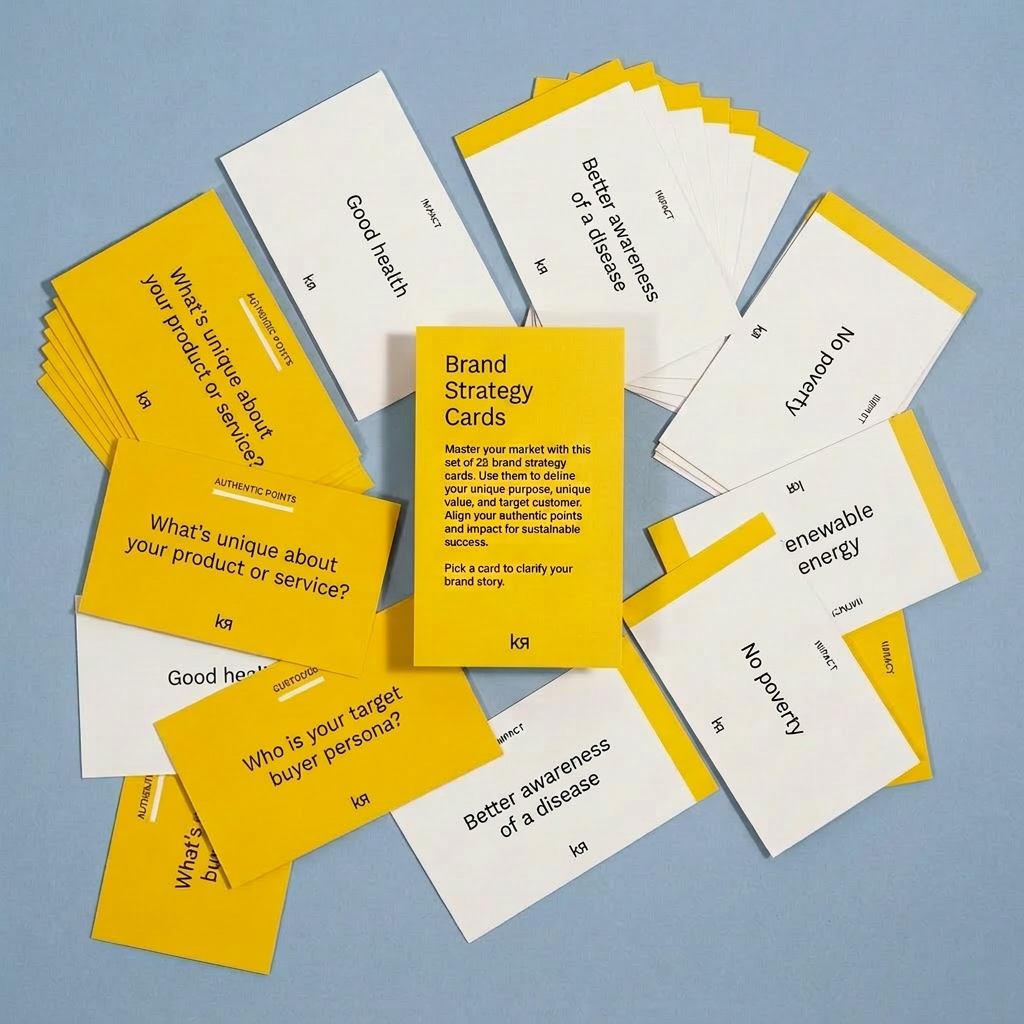
As a brand strategist, your job is to help businesses put their best foot forward so they can attract their ideal customers. When you’re working with a new client, it’s essential to help them lay a solid foundation at the beginning of the branding process. A brand strategy workshop is a perfect way to do that.
There are three main types of clients: 1) a new business that wants to embark on branding, 2) a business that’s been around for a while but never did a proper branding, and 3) an existing brand that wants a refresh.
Whichever one you’re working with, you want to make sure your brand strategy workshop starts out strong, runs smoothly, and ultimately generates the desired results. Here are our tips for crystallizing your client’s next level of success during a brand strategy workshop.
Tip #1: Synchronize with the Participants
As the brand strategist and workshop facilitator, it’s important that you provide structure and free-flowing discussion. This requires having an organized format and useful tools that keep things on track. You don’t want to end up with a hundred ideas and no decisions.
Although an agenda is important, you also want to make sure there is plenty of time and space for everyone to be heard. Emphasize that all ideas are welcome. Expect differing viewpoints and opinions – that’s what makes for a fruitful session.
Encourage participants to explore beyond the obvious. Prompt them with open-ended, creative questions like “What if?” or “How might we?” to uncover new angles and challenge assumptions. A diversity of perspectives is not just valuable—it’s essential to spark original thinking and arrive at more distinctive brand directions.
Ultimately, though, you’ll be guiding participants toward agreeing on some main points and goals. When everyone feels like they’ve contributed and are on the same page, it’s far more likely that discussion will flow smoothly and reach a successful conclusion.

Tip #2: Who’s in Charge?
Whether you’re working with a large company or a small business, you’ll encounter different management models. It’s important to understand your client’s structure before the first workshop session because it will dictate how you interact with participants – and how they interact with each other.
If the company is a “top down” management model, the group won’t be making decisions as a whole. Everyone might be invited to contribute their ideas and opinions, but ultimately it will be the top managers who make the final decisions.
On the opposite end of this is a team model, where everyone collaborates and the power is distributed laterally. This might make for a more unwieldy workshop session if participants can’t agree; more likely, however, they’ll reach consensus that please and inspire everyone.
During a branding workshop, you don’t want to push team members to make decisions when that’s upper management’s job. Conversely, if it’s a collaborative workplace, you don’t want to always look to “the boss” for the answers as that will alienate team members.
Tip #3: Recognize Where Your Client is Now
The branding or rebranding process is a journey with a starting point and an ending point. You want to recognize where your client is now and where they want to go next.
It’s useful to establish where they are now by asking questions like:
- Where are we now?
- Why do we want to make changes?
- What’s working?
- What’s not?
- Is this the right time to be doing this?
Listen for common themes. Ask follow-up questions to make sure you’re clear on where they think they are right now. Clarity among all the players, including you, is the key to success.
To fuel deeper insight, add creative prompts that open new angles of inquiry: “What assumptions are we making?” or “If we could reimagine this from scratch, what would we do differently?” These kinds of questions help participants move beyond surface-level responses.

Tip #4: Understand Where the Client Wants to Go Next
Now, let’s understand where the client wants to go next and what they envision as their next level of success.
Here are some helpful questions to ask:
- What does the ultimate success look like for your brand/company?
- What is the dream?
If the client doesn’t know these answers, you will need to ask some “sideway” questions which would uncover the dream and make the client shine again.
These questions could be:
- What do you enjoy doing the most? What gives you the most energy?
- What isn’t working for you and your brand right now?
- If there’s one thing you would change in your business, what would it be?
Based on the answers you’ll hear, you can further lead the conversation in order to get to the very bottom of the matter.
Invite participants to dream freely. Encourage imaginative thinking with questions like, “What would this brand look like if nothing held us back?” or “What values do we refuse to compromise on, even if it means slower growth?” Creative exploration at this stage can help crystallize a more inspiring and purpose-driven vision.
Remember that you may hear very different things from top leadership than you do from the team. That’s okay. Allow time for a free flowing discussion and make sure there is time for everyone to reflect.
The best outcome will be when everyone feels unified around the goals. This builds enthusiasm and in turn translates into loyalty and overall workplace harmony.
Tip #5: Document the Discussions Effectively
With so much discussion, you’ll want to have a reliable system to corral all of the information being generated—especially as a brand strategist guiding teams through layered conversations—so it’s easy to use going forward. Take good notes or record the session if possible.
If you’re using our Brand Canvas, there are spaces to fill in the key points from this session. These create the foundation that you’ll be building upon throughout the workshop. By the end, the Canvas will display all of the elements for successful branding. It’s a great tool for any serious brand strategist.
For added inspiration, consider inviting participants to sketch, map, or even collage ideas during certain segments—especially when defining values or visual language. Hands-on creativity can spark unexpected insights. You can also experiment with lateral thinking activities like ‘reverse assumptions’ (ask: what if we did the opposite of what’s typical in our industry?) or invite participants to reframe their brand from the viewpoint of an outsider or a competitor. These exercises help break habitual thinking and surface untapped possibilities.
Tip #6: Keep Expectations in Check
There can be lots of excitement around branding and rebranding. Expectations can be very high, which means disappointments can feel crushing.
You, as the brand strategist, need to manage expectations and point out that there may be challenges along the way. It’s better to have this discussion sooner rather than later.
Ask participants:
- What roadblocks or detours might we encounter on this journey?
- How could these be removed or avoided?
Your goal here is to pave a smooth path so momentum can build as you go along. This will keep participants feeling positive and engaged in the process.

Tip #7: Introduce the Idea of Impact
Discussing the impact the brand wants to make in the wider world is a very powerful use of time, provided this question fits the brand’s mission in general. I recommend discussing this at the end of the workshop. You, as the brand strategist, might want to introduce this idea upfront so participants and decision-makers can keep it in mind as the brand takes shape.
Make sure participants understand that impact is different from business goals. While the latter is about the success of the company, impact is about how the brand contributes to the wider world. Every brand can have their unique way of doing that, often by rooting their actions in their core values. Consider asking: “How can our brand purpose drive positive change beyond profit?”
For now, you can keep the questions general:
- What kind of impact might we like to have?
- What ideas would make sense with how our company operates?
- What meshes with our brand?
- How can our brand’s actions contribute positively to society and the environment?
- What ethical principles should guide our brand decisions?
There’s no need to make definite decisions at this early stage. Instead, just see what comes up and reference good ideas as needed throughout the rest of the process.
Overall, you want your client’s branding journey to feel positive and exciting. Ensuring that participants feel heard and that there is a unified mission is an essential starting point. Then, as you progress together, things will flow smoothly, everyone will stay inspired, and the brand strategy will be a success.
Framing this discussion creatively can open doors. You might ask, “If our brand were a movement, what would it stand for?” or “What change do we want to see in the world—and how can we be part of it?” These kinds of questions plant seeds for long-term brand relevance and emotional connection.
To keep this momentum alive beyond the workshop, encourage teams to revisit their values and impact goals regularly—whether through quarterly check-ins, internal audits, or reflective sessions. This fosters genuine accountability and helps prevent superficial commitments.
✨ As a brand strategist, you can now guide your clients—or yourself—through the process of crystallizing brand values, purpose, and impact in a clear, guided format. Explore the Brand Core Tool on tools.bloomerangas.com. It features thoughtful prompts and intuitive frameworks designed to help define what a brand truly stands for and how it can show up with clarity, creativity, and integrity.
Learn How to Facilitate a Brand Strategy Workshop
If you’d like to learn how to facilitate a Brand Strategy Workshop, have a look at our Branding Kit. It will prime you for success with a proven process, a set of tools, and a gamified approach.
You might like
-

Branding Kit
This DIY branding kit will take you through the inside-out branding process. At the end of the process, you’ll create a Brand Canvas that contains all the core components of your brand.
Available in print.
€200 -
A Practical Guide to Running Transformational Brand Workshops
This guide is designed to help you facilitate brand strategy in a clear, structured, and deeply insightful way—whether you’re running your sessions in person, online, or hybrid.
Available in digital.
€45 -
Brand Challenge Cards
Gamify your brand workshops with dynamic roleplay challenges.
Coming out soon.
€38 -