This post has an audio story too. Catch a breeze:
The big question—what is creativity?
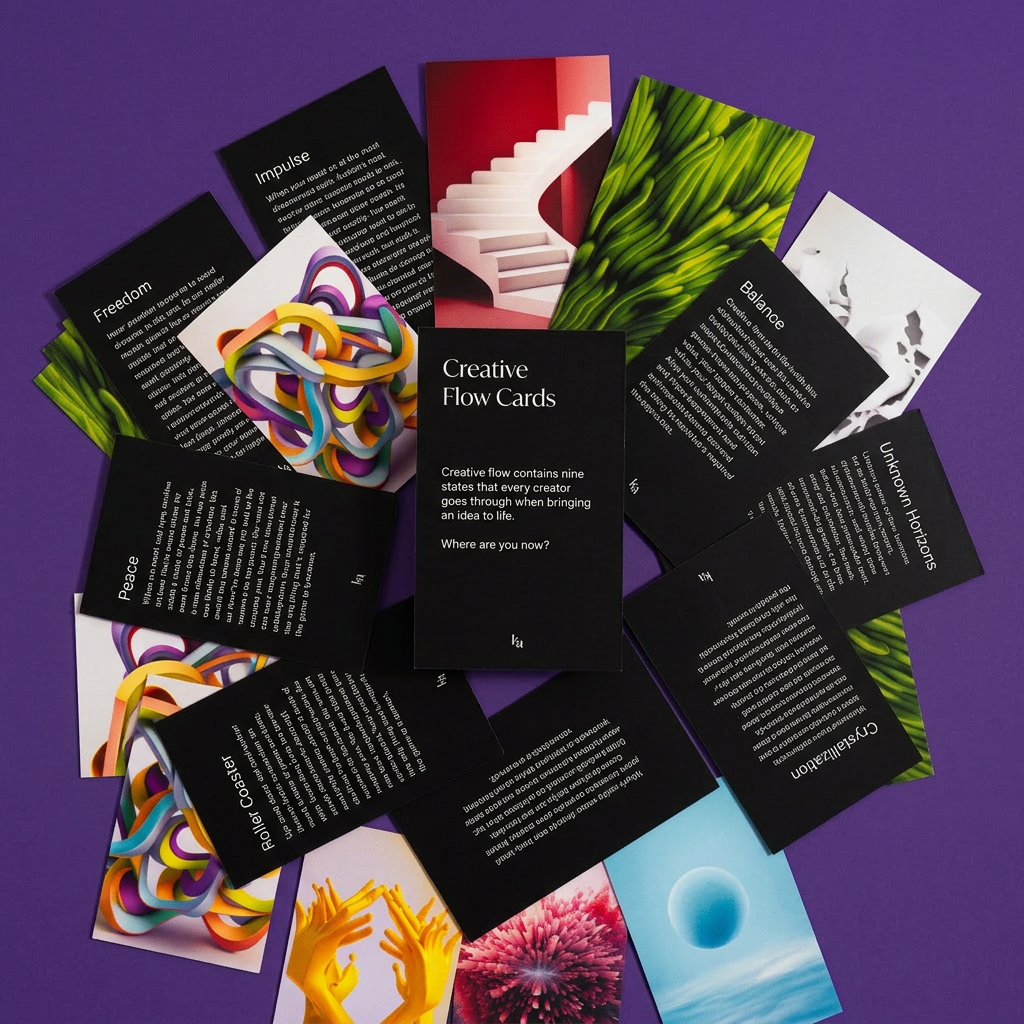
I believe creativity is a life force. It’s a process that begins with an impulse, an idea, an inspiration—and carries us through the act of bringing something new into existence. Whether you’re inviting friends over, cooking a meal, creating a new product, or solving a complex problem—creativity is always present.
But creativity is also like a muscle—it needs training and care. For creative energy to truly flow, and for us to recognize and move through the bottlenecks that stall it, we need specific skills, the right tools, and a mindful awareness. These enable us to navigate its twists and turns, use it productively, and transform it into something meaningful that benefits both ourselves and others.
Let’s explore the topic of creativity in a clear, simple, and practical format—designed to support anyone who wants to better understand the creative process and navigate it in a purposeful and productive way.
If you’d like to dive even deeper into the topic, I invite you to explore my course – A Course in Creativity.
So let’s dive in!
What Is Creativity?
At its core, creativity is about bringing something new into existence. It’s not just about having ideas—it’s about shaping those ideas into something that can be shared with the world. In a business context, it means connecting seemingly unrelated dots in a way that results in real, tangible value: a campaign that moves people, a system that makes things smoother, a product that solves a problem.
But creativity also means courage. To create something meaningful, we must be willing to surrender and enter the unknown. If we do that, it can carry us like a wave carries a surfer. We enter the process without knowing exactly what will come out of it. So we really need to trust the process, have courage and inner strength to allow ourselves to be taken by that wave without always knowing what the outcome is going to be.
In order for creativity to be productive and generate results that serve others (in the form of a product, service or brand, for example)—there are certain skills that we, the creators, need to develop. They will allow us to shape the incoming creative energy into something tangible that can be shared, monetized, and generate real value. I talk more about those tools in my course.
Two Standpoints of Creative Expression
So we talk about creativity as bringing something new out into the world—but how do we do that? In my experience, creativity can emerge from two standpoints: the mind and the intuition.
- Creating from the mind is strategic and deliberate. It starts with research, analysis, and market observation. You might ask: Where’s the gap? What’s missing? It’s an active, mental process of collecting inputs, organizing them, and making strategic decisions.
- Creating from the intuition, on the other hand, feels like flow. This is when ideas come through you. You don’t look for them—they come to you. Ideas show up without you even trying—while walking in nature, cooking, or resting. It’s rooted in inner knowing and embodied wisdom. Many visionary entrepreneurs and creators operate this way. What comes through is often deeply original—because it’s not copied, it’s channeled. They’re not mimicking others—they’re building entirely new ecosystems or ideas.
There is no worse or better way of creating, but from my experience, the best outcomes come from being able to connect both of these standpoints together. Some begin with a feeling, intuitive flow and then bring in structure to shape and realize the idea. Others start with a logical, thought-through plan, then refine it.
Activating Creativity through Good Facilitation
However, being aware and having the tools and capacity to recognize which standpoint you’re in—and the ability to move fluidly between them—is not always an easy task. In a business context, creativity can often feel blocked—especially when teams are stuck trying to solve complex problems.
Sometimes, we can’t move past the block on our own. In group or organizational settings, this is where a skilled facilitator becomes invaluable. When creativity is activated through good facilitation, it can bring in a fresh and broader point of view that opens people’s minds and unlocks new ideas and innovative solutions.
A good facilitator knows how to hold space for both strategic thinking and intuitive flow to co-exist. hey create the structure but also leave room for spontaneity. They sense when to push and when to pause. They ask catalytic questions and draw out ideas that might otherwise remain hidden.
Facilitators who truly know how to hold space for creative transformation are rare—but incredibly valuable. They help teams step beyond habitual patterns and discover new ways of thinking and doing. If you’d like to deepen your facilitation skills, consider our Guide to Running Transformational Brand Workshops and the Bloomerangas Facilitator Course.


Unlocking the Bottlenecks
So what are those blocks that we as creators or as teams encounter that stop us from moving forward? Some of the most common bottlenecks I’ve seen—both in individuals and teams—include:
- Fear: fear of failure, success, or judgment. You might wonder, What if no one likes my idea? Or What if I succeed and it forces me to change my personal or professional life? Often, these thoughts stop us before we even start.
- Perfectionism: waiting endlessly for things to be “ready,” when in truth, they never will be. Adopting a mindset of fine-tuning and improving as you go is essential.
- Short-sightedness: dismissing long-term creative potential because it doesn’t offer immediate results. Creativity often leads to breakthrough shifts that open new territories—but only if we allow the time and space for that evolution.
- Control: micromanagement, rigidity, and the inability to let go. If a team or client feels constantly micromanaged, innovation simply can’t happen. People don’t feel safe to experiment. But experimentation is the key to innovation. Creativity can’t thrive in an environment of fear and excessive control.
These blocks can be subtle—but their impact is profound. The trick isn’t to avoid them but to become aware of them and learn how to work through them.
When you understand the core dynamics that are holding a team or project back, you can ask precise, catalytic questions. These questions help the team see for themselves what might be stopping their progress. But this must be done delicately. No one likes to feel called out. It takes skill and diplomacy to raise these insights gently and productively.
If done well, the magic happens: when you identify the core issue that everyone is stuck on, everything begins to melt away. It creates a domino effect, because all the other challenges are often just byproducts of that main root issue. Once that blockage is cleared, the energy starts flowing again.
Creating from a Place of Alignment
This leads me to one of the most important aspects—and the essence—of the Bloomerangas™ system: alignment.
For impulse and inspiration to come, we must allow ourselves to be taken by the creative energy—trusting it fully and shaping it into a meaningful, productive outcome. This requires deep alignment with who we are. We need to be grounded in our core, aware of our values, in tune with our natural format of expression, and clear on how we want to serve others. These are the foundational self-awareness elements that enable us to shape creative energy into something that is both productive and authentic.
When we are aligned and surrender to this creative energy, we feel part of something greater. Our work stops being only about fulfilling personal needs—it begins serving a higher purpose. We start to contribute to beauty, joy, and the well-being of others.
Everyone is inherently creative, but not all have the skill or capacity to bring ideas into form. If you do, that’s a gift. And if you use that gift in service of others, the ripple effect can be extraordinary.
If you’re feeling a bit off or disconnected from your creative flow, we’ve created an Attunement video to help you realign. Take a pause, tune in, and let it guide you back to clarity and inspiration.
Listen here 👇
Sharing and Selling What You Create
Creating from a place of alignment and service naturally leads to the next question: how do we share our work with the world in a way that feels true to us—and how do we receive value in return?
Selling your creativity begins once you’ve shaped your creation and packaged it in a way you can share with the world. At this stage, it’s about connecting with your audience and offering them what you’ve created.
Many creatives feel uneasy about selling, questioning how to price their creativity or whether it’s something they should even be doing. But there is no shame in selling. If you’ve created something useful for the people, helping others solve problems, build beauty, or come into alignment with their purpose, then it deserves to be seen—and receiving an exchange in the form of money—is not only fair but necessary. Selling becomes an act of service.
One simple place to begin is identifying who would benefit most from what you’ve created—and then speaking directly to their needs, their language, and the transformations they’re seeking.
Here are a few practical tips to guide you:
- Choose your pace and budget: Decide how much time and energy you realistically want to invest. Whether full-time or a few hours a week, define your boundaries.
- Find your people: Who would benefit most from your creation? Where do they spend their time? Use simple tools like customer personas or positioning statements to shape your message.
- Reframe selling: Think of it as sharing. You don’t have to convince everyone. Speak to those who truly resonate with your work—and let desire arise naturally from genuine connection.
When you see selling as a form of service, it becomes fun, natural, authentic, and empowering.
Inside the course, we explore pricing models, communication strategies, and revenue paths—from subscriptions to productized services—that let you share your creativity in ways that feel aligned and sustainable.
If you’d like to go deeper into this topic, I invite you to explore the full Course in Creativity. It’s designed to help you tap into your creative energy, follow its flow, and shape what’s coming through you into something that serves others—fueling the impact you’re here to make and unlocking the door to meaningful success.
You might like
-

A Course in Creativity
Discover how to tap into your creativity, follow its flow, and shape what’s coming through you into something that serves others.
€60 -
-
A Practical Guide to Running Transformational Brand Workshops
This guide is designed to help you facilitate brand strategy in a clear, structured, and deeply insightful way—whether you’re running your sessions in person, online, or hybrid.
Available in digital.
€45 -
The Aligned Brand
This online class will help you establish the core elements of your brand so it aligns with your current aspirations and goals—and deeply resonates with your audience.
Free